
For many years, robots were mainly known as robotic arms performing repetitive tasks in industrial production lines. However, with the rapid advancement of Artificial Intelligence (AI), robots are now entering a completely new stage of development: becoming smarter, more flexible, and capable of interacting with humans in real-world environments.
The evolution of modern robots is the result of the convergence of three core technological domains: artificial intelligence, advanced sensing technologies, and high-performance computing tools. AI enables robots to learn and make decisions; sensors such as cameras, LiDAR, and force sensors allow robots to perceive their surroundings; while GPUs, Edge AI, cloud computing, and computational software enable real-time data processing.
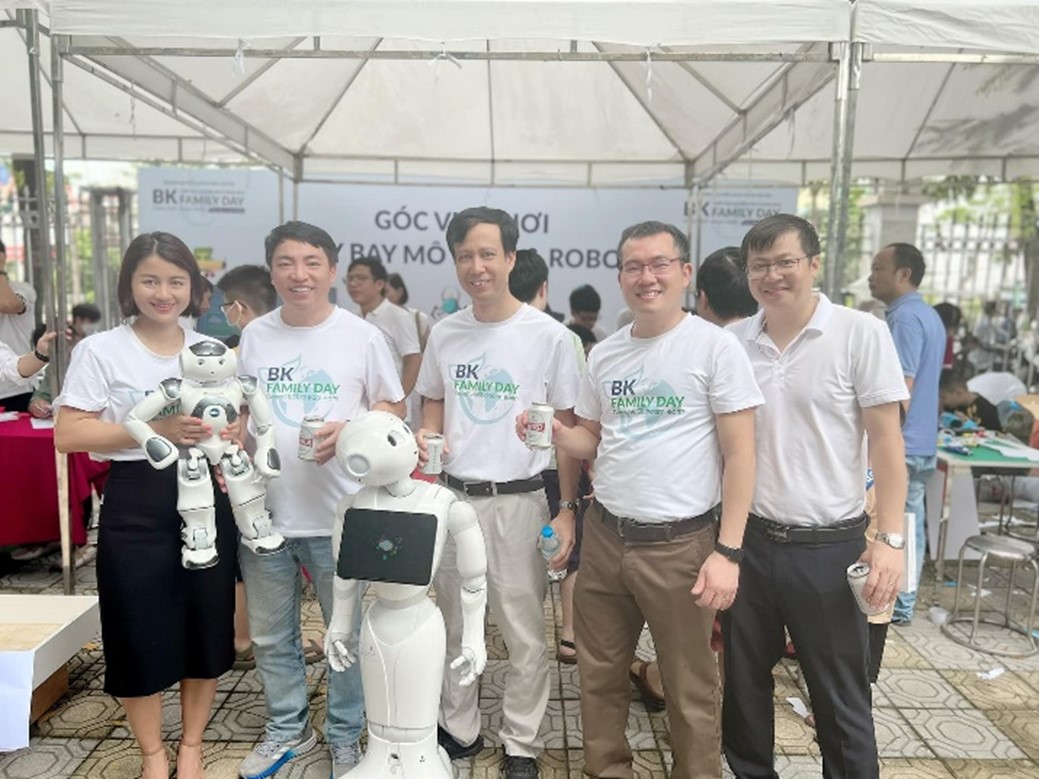
Figure 1. Humanoid robot showcased during the HUST Family Festival.
As a result, robots are no longer limited to executing predefined commands. They can now recognize environments, analyze data, and adapt to complex situations. This also forms the technological foundation of smart factories and digital manufacturing in the AI era.
One of the strongest development trends today is Collaborative Robots (Cobots). These robots are designed to work directly alongside humans in the same workspace with high safety and flexibility. Cobots are gradually becoming “digital coworkers” in smart factories.
At the same time, autonomous robots for logistics and warehousing are rapidly developing. AGV/AMR robots can localize themselves, avoid obstacles, and optimize navigation paths using AI and intelligent sensor systems.
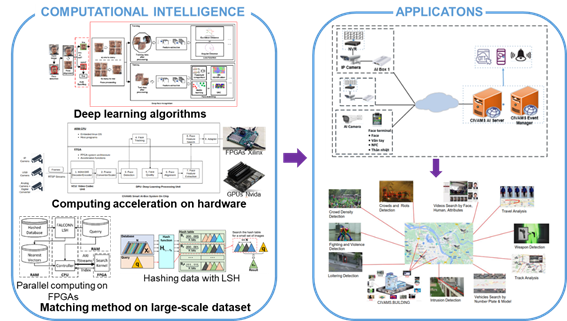
Figure 2. Collaborative robots in industrial applications.
In particular, Humanoid Robots have become a major focus of global research. Large corporations such as Tesla, Figure AI, and Boston Dynamics are developing robots with human-like structures for manufacturing and service applications. New-generation humanoid robots integrate generative AI, computer vision, and whole-body control, enabling natural communication and learning from humans.
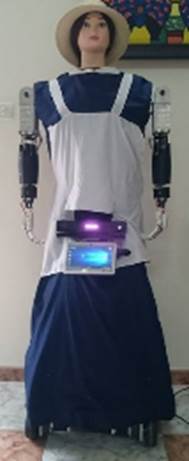
Figure 3. Humanoid robot developed by the research group of Assoc. Prof. Dr. Nguyen Xuan Ha.
Another emerging trend is Agentic AI — AI agents capable of autonomously planning and executing sequences of actions to achieve goals. This allows robots not only to respond to individual commands but also to understand overall tasks and adapt their operational strategies independently.
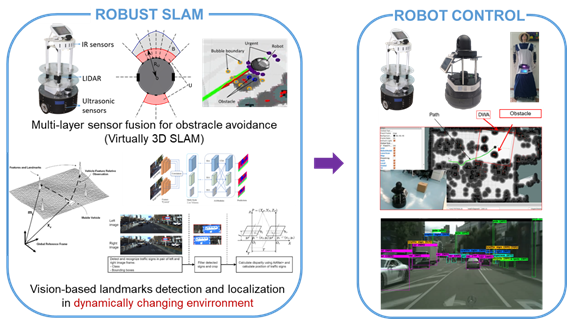
Figure 4. Simultaneous localization and motion planning.
In addition, research directions such as Vision-Language Navigation (VLN), Vision-Language Action Models (VLA), and World Models are creating major breakthroughs in intelligent robotics. These technologies enable robots to understand natural language, associate visual information with actions, and construct internal “world models” to predict outcomes before performing real-world operations.
In Vietnam, digital transformation and the development of smart manufacturing are creating an increasing demand for robotics and automation technologies. Companies in electronics, mechanical manufacturing, logistics, and high-tech agriculture are actively adopting robotic systems to improve productivity and optimize operational costs.
Importantly, modern robotics is shifting strongly toward software, AI, and system integration — representing a significant opportunity for Vietnam. With strengths in information technology, AI, and control engineering, Vietnam has strong potential to participate in the global robotics value chain through the development of algorithms, embedded systems, and AI solutions for robots.
Practical applications such as logistics robots, search-and-rescue drones, smart factory robots, and service robots are opening numerous research and development opportunities for students and young engineers.
Facing the rapid growth of AI Robotics, the School of Mechanical Engineering – Hanoi University of Science and Technology is gradually affirming its pioneering role in intelligent robotics education and research in Vietnam.
The Mechatronics Engineering program has developed many modern courses such as Industrial Robots, Autonomous Robots, Collaborative Robots, Robot Operating Systems (ROS), Robot Vision, Humanoid Robots, and Deep Learning for Robot Perception and Cognition. Students have access to advanced laboratories equipped with industrial robots, mobile robots, 3D cameras, drones, and simulation systems for AI Robotics research.
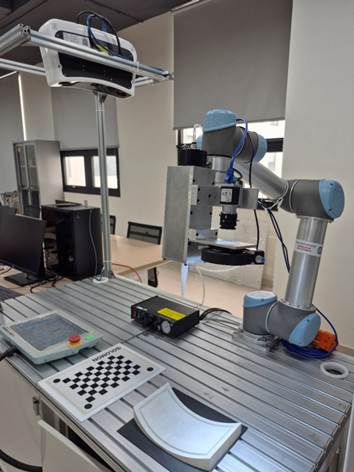
Figure 5. An automated robotic system for contour-based machining combined with simultaneous visual inspection.
The university’s faculty members and research groups play a central role in robotics education and development activities. Many lecturers have been trained at international universities and research institutes, with expertise in autonomous robots, AI, intelligent control, computer vision, and embedded systems.
Beyond theoretical teaching, faculty members also directly supervise students in scientific research, AI Robotics projects, and collaborations with technology enterprises.
 |  | |
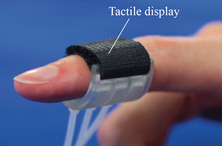 | 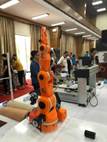 |  |
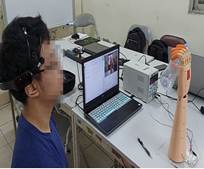
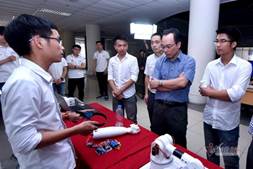
Figure 6. Student scientific research activities at the Mechatronics Department.
In particular, the development orientation of the Intelligent Human–Machine Interaction Laboratory (iHMI Lab) will create an interdisciplinary research environment in AI, robotics, VR/AR, and human–robot interaction.
Besides academic training, students also have opportunities to participate in scientific research, AI Robotics projects, and industrial collaborations, thereby enhancing creativity and future-oriented technological thinking.
Career Opportunities for Robotics Students
The rapid development of AI and robotics is generating substantial workforce demand in many high-tech industries. After graduation, students majoring in Mechatronics and Robotics can work in smart manufacturing enterprises, technology companies, research centers, or automation corporations both domestically and internationally.
Common career positions include:
Robotics and Automation Engineer
AI and Computer Vision Engineer
Control and Embedded Systems Engineer
Autonomous Robot Development Engineer
Smart Factory System Integration Engineer
AI Robotics Researcher
In addition, students may continue with postgraduate studies, doctoral research, or technology startups in robotics and AI. With the strong growth of smart manufacturing and digital transformation, robotics is considered one of the most promising career fields for the coming decades.
Intelligent robots and artificial intelligence are opening a new era in global science and technology development. In the future, robots will not only operate in factories but will also become integrated into every aspect of daily life and production.
For today’s students, robotics is not only a highly technological field of study but also an opportunity to access the most advanced technologies of the AI era. With a strong engineering education foundation and a modern research environment, the School of Mechanical Engineering – Hanoi University of Science and Technology is gradually training a new generation of engineers capable of mastering intelligent robotic technologies in the future.
Author: Assoc. Prof. Dr. Nguyen Xuan Ha - Robot Group, Mechatronics Department
Reader Comments
Newer articles
Older articles