To realize its strategy for developing advanced, environmentally friendly energy technology fields, the Department of Thermal Energy, School of Mechanical Engineering, Hanoi University of Science and Technology continues to attract and develop a team of outstanding young lecturers and scientists through the Project Attracting and Recruiting Talented Young Lecturers, Experts, and Leading Scientists (HUST-Talent).
In early 2026, the Department of Thermal Energy welcomed three young lecturers trained at leading universities worldwide, helping strengthen its capacity for in-depth research into new and nuclear energy technologies.
Strengthening Research on Fuel Cell Technology and New Energy from Hydrogen, Ammonia, and Biomass
Dr. Nguyen Huu Linh and Dr. Nguyen Xuan Linh both earned their PhDs in Thermo-Fluid Engineering from Chungnam National University (South Korea). The two lecturers focus their research on new energy technologies, particularly fuel cells and hydrogen energy systems.
During their research work in Korea, the two lecturers took part in numerous collaborative projects with businesses and international research groups and published papers in reputable SCI/SCIE journals such as Energy Conversion and Management, Energy, International Journal of Hydrogen Energy, Applied Thermal Engineering, International Journal of Heat and Mass Transfer, and Renewable Energy. Their work focuses on improving the performance, durability, and reliability of fuel cell systems, developing smart thermal- and energy-management strategies, and optimizing fuel cell systems for power generation and zero-emission transportation.
Key research directions include:
PEMFC and SOFC fuel cells for power generation and transportation;
Hybrid systems combining fuel cells, storage batteries, and renewable energy sources;
Thermal, water, and energy management for fuel cell systems;
Multi-physics simulation and CFD;
AI-based optimal control for hydrogen energy systems.
The research group aims to develop hydrogen technologies to support carbon-neutrality goals, while strengthening cooperation with research institutes, universities, and enterprises, both domestically and internationally, to drive Vietnam's green energy transition.
Building Research Capacity in Nuclear Energy and High-Performance Computational Simulation
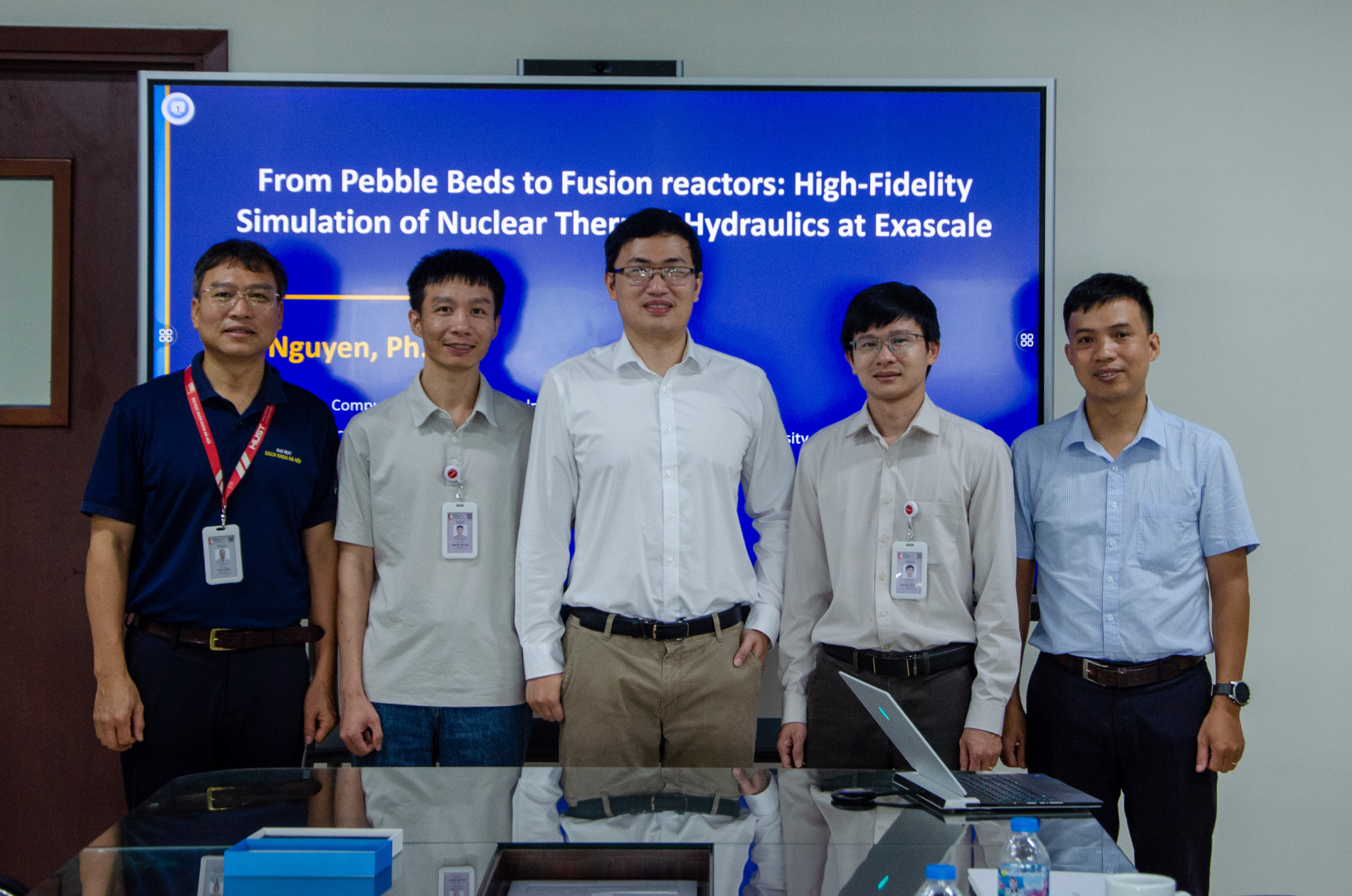
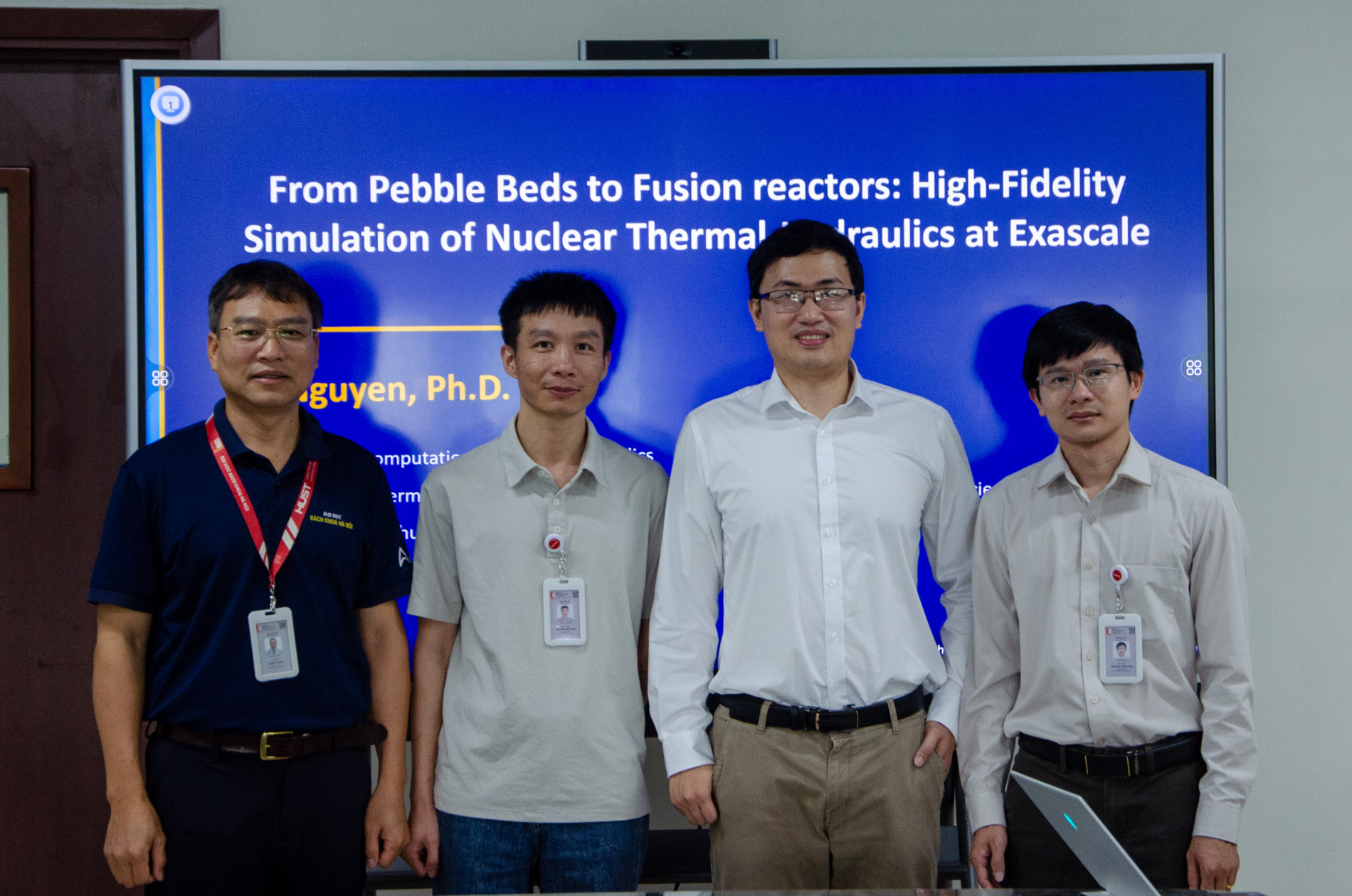
Dr. Nguyen Tri earned his PhD from Pennsylvania State University (PSU, USA). PSU is one of the world's leading institutions for nuclear engineering education and research.
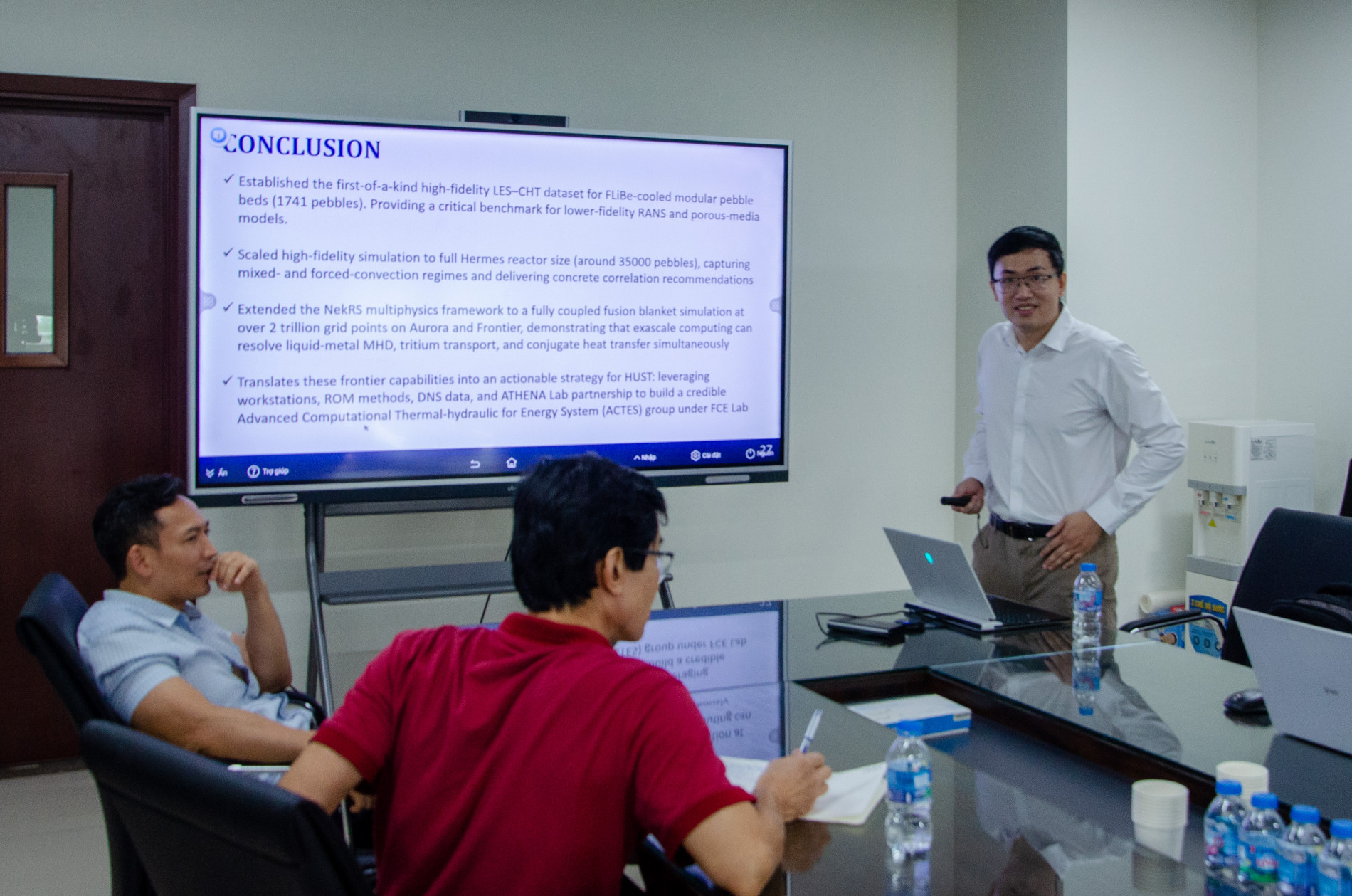
Dr. Tri has extensive experience in high-performance computing (HPC), computational fluid dynamics (CFD), and heat transfer for large-scale energy systems. His research focuses on developing and applying computational models ranging from low- to high-fidelity simulation to analyze the design, performance, and safety of advanced energy systems. His results have been published in reputable international SCI/SCIE Q1/Q2 journals, advancing high-accuracy simulation methods for next-generation nuclear reactors, coal-fired boilers, and heat exchangers. The HPC systems currently in use are ROAR Collab, OLCF Frontier, and ALCF Aurora. The access is provided through Dr. Tri's appointment as an Adjunct Professor at PSU. ROAR is PSU's flagship HPC system, equipped with more than 10,000 CPUs and GPUs, including AMD EPYC 9354 and Intel Xeon Gold 6430 processors and NVIDIA A100/P100 GPUs, along with more than 20 PB of storage capacity. Frontier is the first exascale HPC system in the United States. Its HPE Cray EX architecture, with 3rd-generation AMD EPYC CPUs and AMD Instinct MI250X GPUs, enables Frontier to achieve 1.353 exaflops/s, ranking 3rd in the world (as of 6/2026). Aurora is an Intel-based exascale HPC system (Xeon Max Series CPUs and Data Center GPU Max Series GPUs), reaching 1.012 exaflops/s and ranking #4 in the world (as of 06/2026).
Research directions include:
Thermal-hydraulic simulation for advanced nuclear reactors;
Safety analysis and reactor design optimization;
Simulation of combustion and heat transfer in coal-fired boilers;
Design and optimization of heat exchangers;
Development of multi-physics simulation methods on high-performance computing platforms.
Dr. Tri's arrival marks an important development for the Department in nuclear energy and lays the groundwork for interdisciplinary research spanning thermal-hydraulics, CFD, heat transfer, and high-performance computing.
Toward an Advanced Energy Research Center
With the addition of young lecturers trained in South Korea and the United States, the Department of Thermal Energy is progressively building strong research groups in the following fields:
Hydrogen technology and fuel cells;
Clean and low-emission energy systems;
CFD simulation and energy system optimization;
Heat transfer and heat exchangers;
Nuclear energy and reactor safety;
High-performance computing (HPC) in energy engineering;
Biomass gasification and pyrolysis technology;
Optimization of primary energy conversion processes (combustion, gasification, and pyrolysis of fuels in general);
Clean fuel (hydrogen, ammonia) conversion technology for energy production.
The arrival of young scientists with international academic backgrounds, a track record of publishing in leading global journals, and experience collaborating with numerous international partners will help improve training quality and drive forward scientific research and technology transfer. This is also an important step in the strategy to build the Department of Thermal Energy into Vietnam's leading center for education and research in clean energy, new energy, and nuclear energy, actively contributing to the country's energy transition and sustainable development.
Author: Dr. Le Duc Dung, Department of Thermal Engineering
Reader Comments
Newer articles
Older articles